
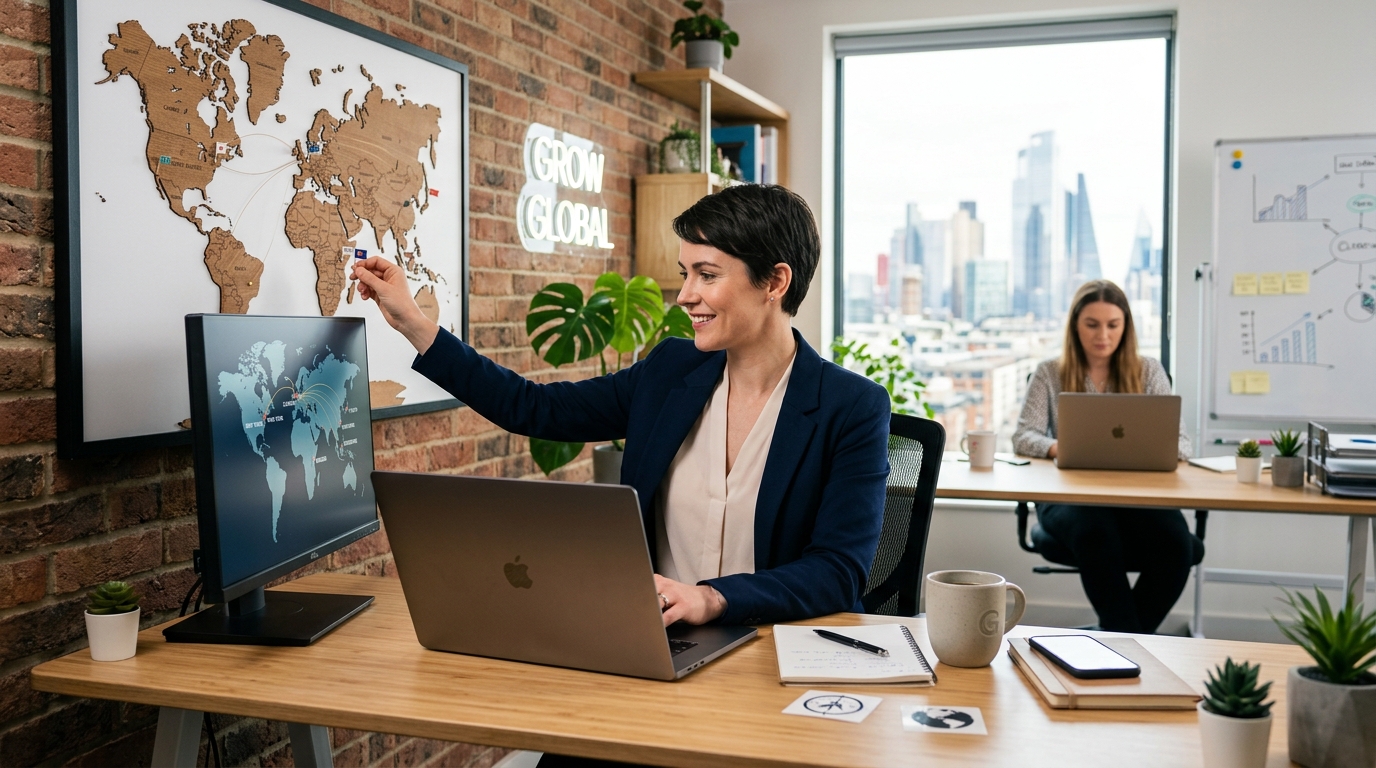
A quiet revolution is happening in global commerce, and most business media is missing it. Women founders, many of them running companies with fewer than ten employees and operating budgets that wouldn’t cover a single quarter’s rent in Manhattan, are building international customer bases from kitchen tables, co-working spaces, and home offices. They’re shipping products to six continents, managing remote teams across time zones, and generating revenue in multiple currencies, all without a single round of venture capital.
The old playbook said you needed deep pockets and corporate infrastructure to go global. These founders are proving that wrong every single day. What makes this trend especially interesting is that it’s not driven by one industry or one geography. From handmade skincare brands in Nairobi selling to European consumers, to SaaS founders in Manila serving clients in North America, women-led startups are finding creative, budget-conscious paths to international markets. The strategies they’re using aren’t theoretical. They’re practical, repeatable, and often born from necessity rather than an MBA curriculum. This is the story of how women-founded businesses are going global on a startup budget, and what any scrappy entrepreneur can learn from their approach.
What Are “Micro-Multinationals”?
Since around 2018, a new category of companies has gained traction: micro-multinationals.
These are businesses that:
- Have fewer than 50 employees
- Operate internationally from day one
- Use digital tools instead of physical infrastructure
Unlike traditional companies, they don’t “expand globally” later—they start global.
Example:
A jewelry designer in Bogotá doesn’t wait to “conquer” Colombia before listing on Etsy and shipping worldwide. She starts global.
- Lists products online immediately
- Ships globally via marketplaces
- Builds an international audience from day one
The Lean Global Strategy (Step-by-Step)
A lean global strategy removes unnecessary costs and focuses on efficiency.
Core pillars:
- Digital distribution
- Remote collaboration
- Community-driven marketing
Typical process:
- Identify demand using free analytics tools
- Test with small inventory or digital products
- Use third-party logistics for fulfillment
- Reinvest profits into expansion
Realistic cost:
You can test a new international market for under $500.
How Women Founders Overcome Global Barriers
Traditional barriers still exist—but they’re no longer deal-breakers.
Then vs Now:
| Challenge | Before | Now |
| Customs | Required brokers | Automated platforms |
| Currency exchange | 5–8% fees | <1% via fintech |
| Translation | Expensive agencies | AI + freelancers |
| Market entry | High capital | Digital-first testing |
Women founders are not waiting for perfect conditions – they are building around constraints.
Digital Tools Powering Global Growth
1. E-commerce Platforms
Modern platforms eliminate technical complexity:
- Multi-currency checkout
- International shipping integrations
- Tax compliance tools
Result: A global storefront can be launched in hours.
Key insight:
You don’t build infrastructure – you rent it affordably.
2. Social Media as a Global Growth Engine
Instead of expensive ads, many founders rely on organic reach.
Why it works:
- Content crosses borders for free
- Niche audiences exist in every country
- Authentic storytelling builds trust faster than ads
Example strategies:
- Tutorials in local languages
- Behind-the-scenes content
- Customer stories
- Educational posts
Community-Led Global Expansion
Women founders often scale through collaboration, not competition.
Global networks provide:
- Buyer introductions
- Market insights
- Trade opportunities
- Certification support
Why this matters:
Instead of cold outreach, founders can:
- Join curated matchmaking events
- Access warm introductions
- Enter new markets faster
Mentorship as a Growth Shortcut
Mentorship is one of the highest-leverage growth tools.
What mentors provide:
- Market-specific insights
- Regulatory guidance
- Proven templates
- Direct introductions
Impact:
A founder can reduce:
- Time-to-market by 50% or more
- Costly trial-and-error mistakes
Financial Strategies for Global Expansion
1. Borderless Payments
Traditional banking is expensive and slow.
Modern solutions enable:
- Multi-currency accounts
- Low conversion fees
- Faster international transactions
Example:
A founder can:
- Receive euros
- Pay contractors in another currency
- Avoid unnecessary conversions
2. Grants and Micro-Funding
Women founders increasingly use stacked funding strategies:
- Small grants
- Micro-loans
- Crowdfunding
- Revenue reinvestment
Why this works:
It reduces dependency on large investors while maintaining control.
Building a Global Team on a Budget
The Remote Workforce Model
Instead of hiring full-time employees globally, founders use:
- Freelancers
- Part-time specialists
- Virtual assistants
Example setup:
- Founder: strategy & product
- VA: operations
- Translator: localization
- Social media manager: regional growth
Cost:
Often under $3,000/month for a global team.
Smart Localization Without Overspending
Full localization is expensive – but partial localization works.
Prioritize:
- Product pages
- Checkout process
- Customer support
- Payment methods
Delay:
- Blog content
- Full website translation
- Internal systems
Rule of thumb:
“Translate the cash register first.”
Sustainable Scaling: One Market at a Time
The most successful global startups follow a disciplined approach:
- Enter one market
- Reach profitability
- Expand using earned revenue
Why this works:
- Reduces risk
- Improves focus
- Builds stronger market presence
Key Takeaways for Founders
Women-led global startups succeed because they are:
- Resourceful with limited budgets
- Strategic in market selection
- Strong in community building
- Disciplined with finances
They don’t wait for funding or permission.
They build global-first businesses from day one.
Final Thought
Global business is no longer reserved for large corporations.
Today, a single founder with:
- A laptop
- Internet access
- And a clear strategy
can build a company that serves customers worldwide.
The tools exist. The barriers are lower than ever.
The only question is: which market will you enter first?